
Our research team presented two papers at the 2026 Canadian Society of Biblical Studies Annual Meeting. Hosted by Mount Allison University in Sackville, New Brunswick from May 28th to the 30th, the meeting was an excellent opportunity for our team to share our insights as a result of two years of working on the SSHRC Family Research Grant Project.
See below for the papers presented as well as relevant resources to support your own research into these fascinating subjects.
Rereading 1 Cor 7 and its legacies in light of early Islamic sexual ethics within a shared late antique world
Co-presenters: Dr. Margaret Y. MacDonald and Dr. Syed Adnan Hussain


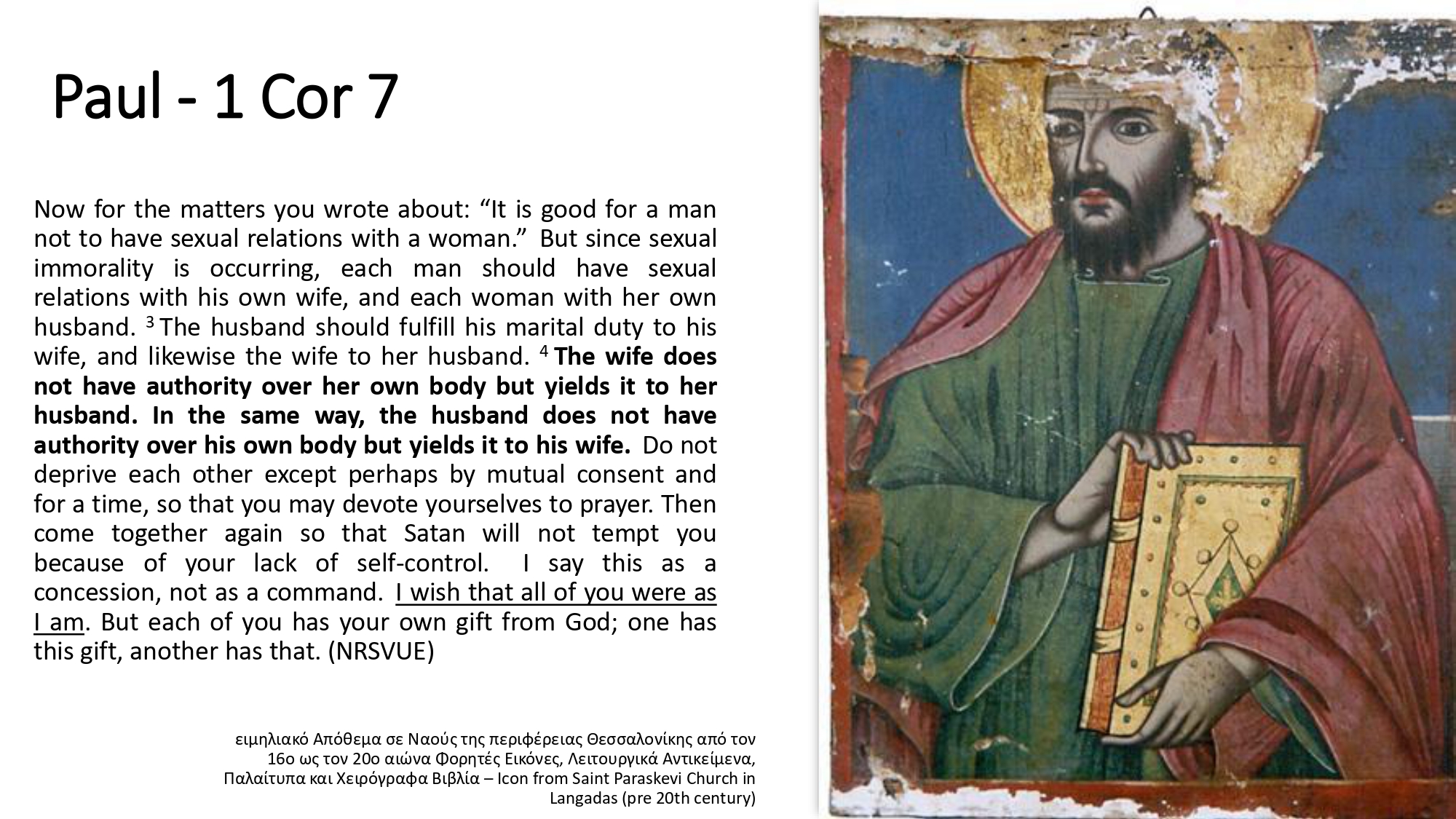
![1 Cor 7: 2-5 But because of cases of sexual immorality, each man should have his own wife and each woman her own husband. 3 The husband should give to his wife what is due her and likewise the wife to her husband. 4 For the wife does not have authority over her own body, but the husband does; likewise, the husband does not have authority over his own body, but the wife does. 5 Do not deprive one another except perhaps by agreement for a set time, to devote yourselves to prayer, and then come together again, so that Satan may not tempt you because of your lack of self-control. (NRSVUE) 1 Cor 7: 36-38: 36 If anyone thinks that he is behaving indecently toward his fiancée, if his passions are strong and so it has to be, let him marry as he wishes; it is no sin. Let them marry. 37 But if someone stands firm in his resolve, being under no necessity but having his own desire under control, and has determined in his own mind to keep her as his fiancée, he will do well. 38 So then, he who marries his fiancée does well, and he who refrains from marriage will do better. (NRSVUE) Qur’an 4:3 (sura al Nisa [lit. the women]) Beware of severing the ties of kinship: God is always watching over you. Give orphans their property, do not replace [their] good things with bad, and do not consume their property with your own–a great sin. If you fear that you will not deal fairly with orphan girls, you may marry whichever [other]d women seem good to you, two, three, or four. If you fear that you cannot be equitable [to them], then marry only one, or your slave(s):e that is more likely to make you avoid bias. Give women their bridal gift upon marriage, though if they are happy to give up some of it for you, you may enjoy it with a clear conscience. (Haleem trans.)](https://margaretmacdonald.ca/wp-content/uploads/2026/09/csbs-slide-macdonald-and-hussain-the-mutuality-of-sexual-rights-and-treatment-of-virgins.jpg)
![1 Cor 7: 12-16 12 To the rest I say—I and not the Lord—that if any brother has a wife who is an unbeliever and she consents to live with him, he should not divorce her. 13 And if any woman has a husband who is an unbeliever and he consents to live with her, she should not divorce the husband. 14 For the unbelieving husband is made holy through his wife, and the unbelieving wife is made holy through the brother. Otherwise, your children would be unclean, but as it is, they are holy. 15 But if the unbelieving partner separates, let it be so; in such a case the brother or sister is not bound. It is to peace that God has called us.16 Wife, for all you know, you might save your husband. Husband, for all you know, you might save your wife. (NRSVUE) Qur’an 65:1 (Sura al-Talaq [lit. Divorce] Prophet, when any of you intend to divorce women, do so at a time when their prescribed waiting period can properly start, and calculate the period carefully: be mindful of God, your Lord. Do not drive them out of their homes––nor should they themselves leave––unless they commit a flagrant indecency. These are the limits set by God––whoever oversteps God’s limits wrongs his own soul––for you cannot know what new situation God may perhaps bring about. (Haleem trans.)](https://margaretmacdonald.ca/wp-content/uploads/2026/09/csbs-slide-macdonald-and-hussain-divorce.jpg)
This paper rereads 1 Corinthians 7 by situating Paul’s account of marriage and sexuality within a broader antique moral world, using as a comparative lens early Islamic legal conceptions of marriage (including child marriage), sexual availability, and deferred consummation.
This comparative exercise explores the significance of Paul’s ascetic teaching and response to marriage and family life, shedding light on what is historically shared and what is specific to the Pauline legacy.
As a shift away from dominant and culturally safe-guarding patterns, 1 Corinthians 7 emerges as a contingent ethical intervention rather than a self-evident foundation of Christian sexual norms.
Relevant resources
Elizabeth A. Clark, Reading Renunciation: Reception and Scripture in Early Christianity, Princeton University Press, 1999.
Judith Gundry-Volf, “Controlling the Bodies: A Theological Profile of Corinthian Sexual Ethics (1 Corinthians 7), in The Corinthian Correspondence, ed. R. Bieringer (Leuven University Press, 1996), 519-41.
David G. Hunter, “The Reception and Interpretation of Paul in Late Antiquity,” in The Reception and Interpretation of the Bible in Late Antiquity, ed. L. di Tommaso/L.Turcescu (Brill, 2008), 162–91.
Margaret Y. MacDonald, “Law and Culture in 1 Corinthians 7: The Status of the Children” in Faith at the Interface of Cultures: Law and Gospel, Johannine Communities and Hebrews, ed. Edwin K. Broadhead, Paul Foster, and Wolfgang Kraus(Brill, 2024), 57-71
Pieter van Koningsveld, “The Islamic Image of Paul and the Origins of the Gospel of Barnabas,” Jerusalem Studies in Arabic and Islam 20 (1966), 200-228.
Michael F. Kuhn, “Early Islamic Perspectives of the Apostle Paul as a Narrative Framework for Tahrif,” in Arab Christians and the Qur’an from the Origins of Islam to the Medieval Period ed. Mark Baeaumont (Boston: Brill, 2018), 150-173.
Fred McGraw Donner, Muhammad and the believers : at the origins of Islam. Cambridge, Mass.: The Belknap Press of Harvard University Press, 2010.
Anne Mcclinktock, Imperial Leather: Race, Gender and Sexuality in the Colonial Context (Routledge, 1995)
The Metaphorical Hagar: A Slave Mother Between Christianity and Islam
Co-presenters: Sherry Brown and Zéa Jones

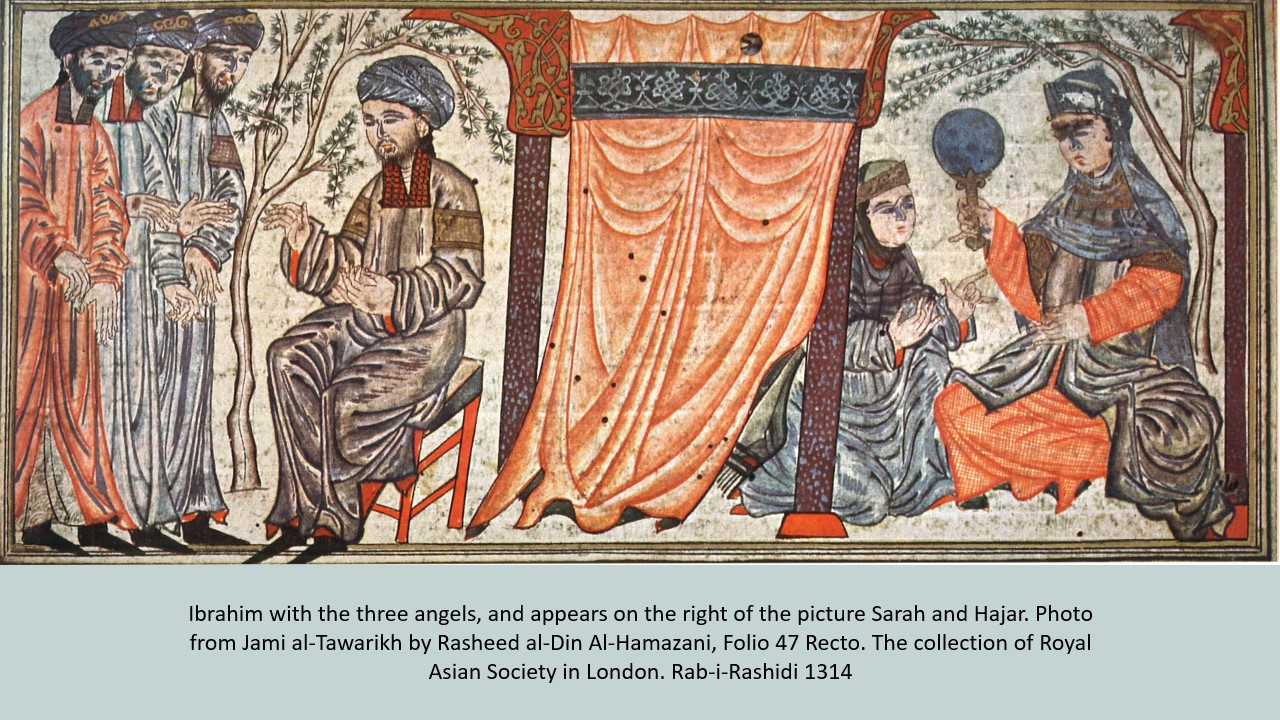

Hagar (Hajar) is a foundational figure used metaphorically by Paul in Galatians 4:21-31 as foil to Sarah’s idealized motherhood, and in the Islamic tradition as a representation of the archetypal mother and penitent. The paper compared metaphorical interpretations of Hagar/Hajar in the Bible and the Qur’an, with emphasis on reaching an intersectional understanding of her status as an enslaved mother.
Special attention was paid to Paul’s allegorical use of a female body to advance identity, and we evaluated a recent surge of interpretive work among feminist scholars regarding perceptions of Hagar across traditions
Relevant resources
Al Fassi, Hatoon Ajwad. “Rewriting Women’s History in Islam: Hajar/Hagar as an Example” 10 (2), 2025.
Crossan, John Dominic. The Dark Interval: Towards a Theology of Story. Polebridge Press, 1994.
Gabrielle, Haley. 2023. “Re-Remembering Hagar: Reading the Σάρξ in Galatians with Hortense Spillers.” Journal of Biblical Literature 142 (2): 305–24. https://doi.org/10.15699/jbl.1422.2023.7.
Kartzow, Marianne Bjelland. 2014. “Intersectional Studies.” In The Oxford Encyclopedia of the Bible and Gender Studies, vol. 2. Oxford University Press.
Michel, Thomas. 2005. “Hagar: Mother of Faith in the Compassionate God.” Islam and Christian–Muslim Relations 16 (2): 99–104. https://doi.org/10.1080/09596410500059557.
Urban, Elizabeth. Conquered Populations in Early Islam: Non-Arabs, Slaves and the Sons of Slave Mothers. Edinburgh Studies in Classical Islamic History and Culture. Edinburgh University Press, 2020.
Wadud, Amina. Inside the Gender Jihad: Women’s Reform in Islam. Oneworld, 2006.
Learn more about this research project